Copy Borrow Steal – The Collection

Like many people, I’m conflicted about the jury’s decision that the inspiration Pharrell and Stripey Rapey Guy took from Marvin Gaye’s Got To Give It Up for their hit Blurred Lines constitutes plagiarism. Much has been said on the subject, and I still don’t know where I stand. The precedent the verdict has set disturbs me.
It seems that the real credit for Got To Give It Up resides not with Marvin Gaye. On his blog David Hepworth writes: “It was recorded from various jams, often surreptitiously, by Marvin Gaye’s engineer Art Stewart, who is quoted in David Ritz’s Marvin Gaye biography Divided Soul saying, ‘Marvin wasn’t sure of what I was doing but he left me alone to piece the song together.'”
The Marvin Gaye family seemed to be reaching points of hubris in the wake of their courtroom triumph, making the claim that Pharrell also ripped of Marvin’s Ain’t That Peculiar for Happy. Apart from the fact that the songs sound nothing alike, the battle would not be the Gayes’ to fight, but for Smokey Robinson, who produced it and co-wrote it with the other Miracles.
So, with all that mind, here’s a collection of songs from which later artists borrowed, copied or stole, or which otherwise bear strong resemblance. Some led to courtcases that found in favour of the original artist or were settled out of court. Others might have inspired the later writer, and some might be purely coincidental, taking into account that there are only so many chord progressions.
Some artists were pretty honest about where they borrowed from, especially The Beatles — George Harrison cheerfully admitted that he nicked from The Byrds for If I Needed Someone. Likewise, Chuck Berry was quite open about it that his breakthrough hit Maybelline was a reworking of Bob Willis’ 1938 song Ida Red.
Of course there are loads more examples that might have been included. I’ve tried to include tracks that are lesser known.
The most famous plagiarism case, at least before the one involving Pharrell & Thicke, is George Harrison’s My Sweet Lord, which supposedly ripped off The Chiffons’ He’s So Fine. In his defence, Harrison said that he took inspiration rather from the Edwin Hawkins Singers hit Oh Happy Day, though more in vibe than in melody. And if one listens to Billy Preston’s version of My Sweet Lord, recorded and released before Harrison’s, then one might be open to giving Harrison the benefit of doubt.
The most involved story here is that of the Rolling Stones’ The Last Time, which Jagger and Keef quite evidently ripped off from the Staple Singers song, which in turn has been said to have borrowed from the Original Five Blind Boys of Alabama’s 1953 song of almost the same title.
The Last Time (Stones version) was adapted in 1966 as an instrumental by their manager Andrew Loog Oldham. He sold his contract to the cut-throat Allen Klein. By 1997, Klein controlled the Stones’ 1960s back catalogue. At that time British band The Verve secured permission from Klein to use Oldham’s string loop as a sample for Bitter Sweet Symphony. When Klein heard an advance copy of the song, he threatened to sue, claiming that the use of the sample exceeded what had been agreed on. The band and publishers settled on a 50/50 royalties split.
As the album hit the shops, Klein reneged on the agreement and demanded 100%, successfully so, because by now the album could not be pulled from the shelves. The out-of-court settlement was a defeat for the Verve — and, to some extent, for Oldham. All royalties were ceded, and the songwriting credit went to Jagger & Richards, even though their version of The Last Time had no significant influence on Bitter Sweet Symphony. And they picked up a Grammy for Ashcroft’s song!
The progression from Otis Redding’s Try A Little Tenderness, from crooner song to soul classic, goes back to 1951: his take was only the fourth (and final) stage of the tune’s evolution as a soul classic.
Before Otis, Sam Cooke had recorded a fragment of the song as part of a rather lovely medley on his 1964 Sam Cooke At The Copa album. It was in fact that fragment which gave Stax executives the idea that Redding should cover it in 1966. Otis did so with great reluctance, not because he hated the song but because he felt he could not measure up to his by now deceased hero Cooke. Produced by Isaac Hayes and backed by Booker T & the MGs, Redding did all he could to mess up the song so that it could not be released. He failed, and the song is now irrevocably his.
Redding apparently knew only Cooke’s version (hence the abridged lyrics). Cooke in turn had decided to include Tenderness in his medley after having heard the song on Aretha Franklin’s 1962 album The Tender, The Moving, The Swinging Aretha Franklin. As fine an interpreter of songs as Franklin would become (and already was at the age of 20), her version — soul-inflected vocals backed with an easy listening string arrangement — seems to have drawn from that by the forgotten Little Miss Cornshucks, whose 1951 recording was the first to Try A Little Tenderness the R&B treatment.
Some of these songs featured in the Copy Borrow Steal series, with backstories. The series was inspired Tim English’s fine book Sounds Like Teen Spirit.
As always, the mix is timed to fit on a standard CD-R and includes home-copied covers. Songs in blue are NOT included, but are the songs that copyborrowedstole or otherwise have intentional or coincidental similarities with or were inspired by the older songs. PW in comments.
- Edwin Hawkins Singers – Oh Happy Day (1968)
CBS: George Harrison – My Sweet Lord - Jorge Ben – Taj Mahal (1976)
CBS: Rod Stewart: Da Ya Think I”m Sexy - Bobby Womack – (If You Want My Love) Put Something Down On It (1975)
CBS: Rod Stewart: Da Ya Think I’m Sexy - The Javells & Nosmo King – Goodbye Nothing To Say (1974)
CBS: Maxine Nightingale: Right Back To Where We Started From - William Bell – I Forgot To Be Your Lover (1971)
CBS: Van Morrison – Have I Told You Lately - Natalie Cole – Our Love (1977)
CBS: Seal – Kiss From A Rose - Badfinger – Day After Day (1971)
CBS: Joe Jackson – Breaking Us In Two - The Byrds – Bells Of Rhymney (1965)
CBS: The Beatles – If I Needed Someone - Johnny Ace – Pledging My Love (1954)
CBS: John Lennon & Yoko Ono – Happy X-Mas (War Is Over) - Spirit – Taurus (1968)
CBS: Led Zeppelin – Stairway To Heaven - Robert Johnson – Terraplane Blues (1937)
CBS: Led Zeppelin – Trampled Underfoot - Rex Griffin – Everybody”s Tryin’ To Be My Baby (1936)
CBS: Carl Perkins – Everybody’s Trying to Be My Baby - Bob Wills – Ida Red (1938)
CBS: Chuck Berry – Maybelline - Hank Williams – Move It On Over (1947)
CBS: Bill Haley & The Comets – Rock Around The Clock - Little Miss Cornshucks – Try A Little Tenderness (1951)
CBS: Otis Redding – Try A Little Tenderness - Sam Cooke – Try A Little Tenderness/(I Love You) For Sentimental Reasons/You Send Me (1964)
CBS: Otis Redding – Try A Little Tenderness - Horace Silver – Song For My Father (1964)
CBS: Steely Dan – Rikki Don’t Lose That Number - Ringo Starr – Back Off Boogaloo (1972)
CBS: Franz Ferdinand – Take Me Out - The Banana Splits – The Tra La La Song (One Banana, Two Banana) (1969)
CBS: Bob Marley – Buffalo Soldier - Humphrey Lyttleton – Bad Penny Blues (1956)
CBS: The Beatles – Lady Madonna - Staple Singers – This May Be The Last Time (1961)
CBS: The Rolling Stones – The Last Time - Original Five Blind Boys of Alabama – This May Be The Last Time (1953)
CBS: Staple Singers – This May Be The Last Time - Paul Robeson – No More Auction Block (1962, folksong)
CBS: Bob Dylan – Blowin’ In The Wind - Burl Ives – Lord Randall (1960, folksong)
CBS: Bob Dylan – A Hard Rain’s A-Gonna Fall


 It didn”t go down well when Rod the Mod donned the leopard-print spandex tights and satin shirt to cash in on the disco boom. His fans were appalled, the disco purists even more so, and the disco haters went into overdrive. Radio jock Steve Dahl was prompted to organise the despicable record burning at Chicago”s Comiskey Park in part because of Rod”s single (for my views on Comiskey,
  Do Ya Think I”m Sexy was written by Stewart with his drummer, Carmine Appice. But clearly, it was largely plagiarised, so Jorge Ben threatened to sue. Rod deftly outmanoeuvred him, and Ben (who also wrote the bossa nova standard Mais Que Nada) saw no profit from it. Stewart grandly announced that future royalties of his ripped-off track would go to UNICEF, at whose proto-Live Aid show he sang “his” song. Ben “” now known as Jorge Ben Jor, after somehow royalties due to him were paid to George Benson “” later complained that UNICEF never even contacted him about the agreement. He was not happy about having been ripped off, but would have been fine with his melody being lifted if only Stewart and Appice had asked him.
 The piano riff of Humphrey Lyttleton”s Bad Penny Blues, played by Johnny Parker, allegedly inspired Paul McCartney ivory-tinkling on Lady Madonna. Engineered by the legendary Joe Meek (who should have received the producer credit), it was the first British jazz number to reach the UK Top 20. Lyttleton, a jazz traditionalist, did not like the song on account of Meek”s innovations.
 You”ll have to make your own mind up about this: to me, the piano intro of Natalie Cole”s 1978 song Our Love sounds suspiciously like the scatted intro of Seal”s 1995 hit Kiss From A Rose (a song I can”t say I”m particularly partial to, though I”ll allow that Seal”s vocal performance is pretty good).
 One of my favourite passages in Timothy English”s fascinating book on songs that have copied, borrowed or stolen, Sounds Like Teen Spirit (
 In my introduction to the
 In early 1940 Alfred Lennon impregnated Julia and soon left her with little John Winston who”d barely hear of his seafaring father again. Alfred predictably turned up when the Beatles became successful. A reunion with his son was icy “” funny enough, John was not impressed with the old man”s sudden paternal interest. Still, John later bought the old man a cottage. In the interim, Alfred tried to cash in by recording a self-justifying single, a precursor for My Way in many ways (in a “I”m a good bloke, ain”t I? I just like the sea more than my offspring” fashion). To John, the single was a running joke; he”d play it as a gag for his friends.
 We might acquit John from nicking chords from his Dad, but his Christmas standard will have the jury wanting exonerating evidence before it can acquit. Stewball, an American folk song adapted from a British ballad about an 18th century racehorse, had been recorded many times before Lennon wrote Merry X-Mas. The folk-influenced Lennon might have been familiar with the versions by Woody Guthrie, the Weavers, Peter Paul & Mary or Joan Baez. It is likely too that he knew the Hollies” version, which appeared on their 1966 album Would You Believe?. Their version sounds close to Lennon”s song in arrangement, apart from the distinct melodic similarity.
 English refers to another inspiration, acknowledged by Lennon: the arrangement, by Phil Spector, was lifted from a song Spector and George Harrison had produced for Ronnie Spector, titled Try Some Buy Some (later recorded by Harrison). Apparently the song was so bad, Ronnie thought her husband and George were joking when presenting her with it. Harrison later put another arrangement from the Ronnie sessions (which she did not record) to his hit song You.
 In his book, English writes that John Lennon almost had a fit when he heard 4th Time Around on Bob Dylan”s Blonde On Blonde album: it ripped off Norwegian Wood, which the Beatles had released a little earlier on Rubber Soul. One can understand Lennon”s point: listen to 4th Time Around a few times, and latest by the third time around the similarities become glaring, especially two-thirds of the way through, and not only in subject matter.
 And if Dylan ripped off Norwegian Wood, the Beatles borrowed and adapted the jangling guitar intro of the Byrds” version of Pete Seeger”s Bells Of Rhymney for If I Needed Someone. Still with Dylan in mind, it is of interest to note that he was influenced to go electric by the Byrds and the Beatles. And just to add to the mix, the Byrds” Gene Clark was moved by She Loves You to abandon the straight folk of the New Christy Minstrels, and instead co-found the Byrds, who borrowed further from the Beatles to get their guitar- and harmony-based sound (Tim English notes that Roger McGuinn bought his essential 12-string Rickenbacker after seeing Harrison use one in A Hard Day”s Night).
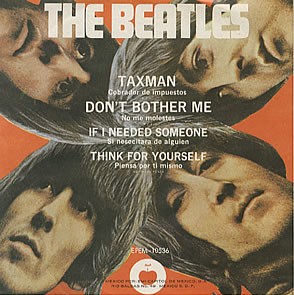 This is the rip-off every fan of English music immediately thinks off. As Fudge said, copying a riff does not constitute legal plagiarism. Here The Jam lifted the guitar and bass riff from Harrison”s rather mean-spirited complaint about having to pay taxes (which, admittedly, were punitive in Britain). The guitar and bass parts in Taxman, incidentally, were played by McCartney. Harrison took over Lennon”s rhythm guitar, and John (who contributed the bipartisan falsetto “Ah ha Mr Wilson; Ah ha Mr Heath”, replaced in the take featured here with the line “Anybody got a bit of money”) did tambourine and backing vocals duty. Start! Was The Jam”s second UK #1 hit after Going Underground.
 Ringo Starr wrote his hit after having a dinner with T. Rex”s Marc Bolan who repeatedly used the word “boogaloo” (I am happy to dismiss the story that Boogaloo was Ringo”s nickname for Paul McCartney, who was engaged in legal action with the other Beatles at the time). The song was produced by George Harrison and was a hit on both sides of the Atlantic.
 know to what extent he knowingly plagiarised the Chiffons” He”s So Fine “” see
  Yes, Steely Dan”s biggest hit borrows liberally. The opening keyboard riff that runs throughout the song was lifted was lifted from the title track of jazz legend Horace Silver”s 1964 album, released on Blue Note (and featuring Silver”s Cape Verde-born father on the cover). Silver was a pioneer of the percussive hard bop form of jazz, but Song For My Father, written after a visit to Brazil, has more of a funky bossa nova vibe.
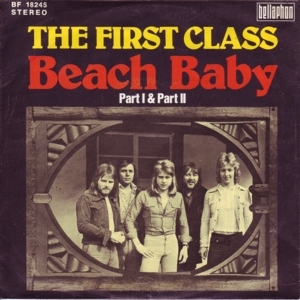 Only nostalgists and one-hit wonder devotees might remember The First Class or Strawberry Switchblade. Beach Baby was The First Class” only hit, in 1974. The First Class was one of the names under which British singer Tony Burrows and songwriters John Carter and Ken Lewis released some of their songs. While Beach Baby was The First Class” only hit, Lewis and Carter were behind other one hit wonders. They were the Flowerpot Men, who had a solitary hit with Let”s Go To San Francisco in 1967, while Burrows fronted Edison Lighthouse, who had a massive hit in 1970 with Love Goes Where My Rosemary Goes, as well as with White Plains (My Baby Loves Lovin”) and Brotherhood Of Men before they hit the Eurovision trail. Carter had previously also enjoyed chart success as a founder-member of The Ivy League (Tossin” And Turnin”).
 Strawberry Switchblade, one of the few acts I ever caught live before they had a hit (The Housemartins and R.E.M. are the others; besides them, I was a jinx to every unknown act I saw), emerged from Glasgow”s punk scene to make some beautiful pop in the mid-“˜80s, produced by John Deacon of Queen (so much for the punk revolution). Since Yesterday was released in November 1984, but hit the UK top 5 only in February 1985. They released only one LP and a couple of singles in Japan before splitting and disappearing.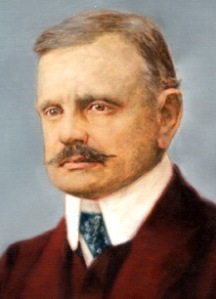
Recent Comments